

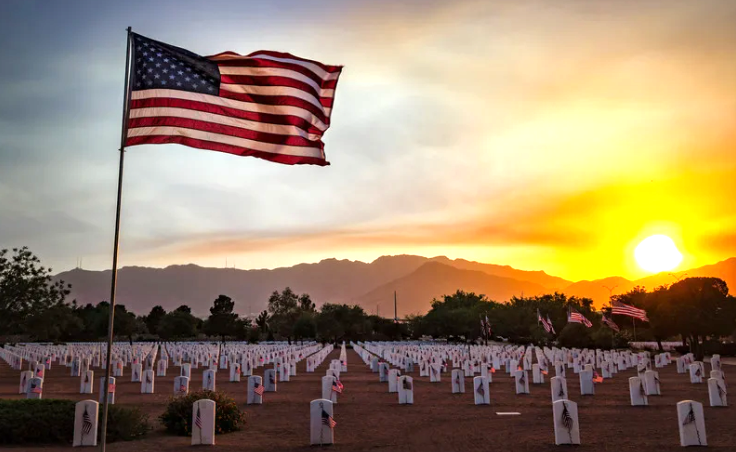
Every year, as the last Monday in May approaches, Americans prepare to observe Memorial Day: a time set aside to reflect, remember, and honor those who gave their lives in service to the United States. Though it often marks the unofficial start of summer with barbecues and beach trips, the holiday’s true purpose is rooted in solemn remembrance.
The Origins of Memorial Day
Memorial Day’s history stretches back to the aftermath of the Civil War, one of the most devastating conflicts in American history. Originally known as Decoration Day, the observance began as a way to honor Union soldiers who died in the war. Communities across the country began hosting ceremonies where they would decorate soldiers’ graves with flowers and flags.
In 1868, General John A. Logan, leader of a Union veterans’ organization, officially proclaimed May 30 as Decoration Day – a time for the nation to honor fallen soldiers. The date was chosen because it didn’t coincide with any particular battle, allowing Americans to collectively remember the dead without the shadow of a specific conflict.
Following World War I, the holiday evolved to honor all U.S. military personnel who died in service, not just those from the Civil War. It wasn’t until 1971, however, that Memorial Day was declared a federal holiday and moved to the last Monday in May under the Uniform Monday Holiday Act, which aimed to provide Americans with a consistent three-day weekend.
Memorial Day vs. Veterans Day
It’s common for people to confuse Memorial Day with Veterans Day. While both honor the military, their focus differs. Veterans Day, observed in November, pays tribute to all U.S. military veterans, living or deceased, who have served the country. Memorial Day, on the other hand, specifically commemorates those who died in active military service.
How Americans Observe Memorial Day
While Memorial Day weekend has become synonymous with family gatherings and the start of summer, millions of Americans still take time to participate in more meaningful traditions:
- Visiting Cemeteries and Memorials: Many families visit the graves of loved ones who served, often leaving flowers, flags, or wreaths as a sign of respect.
- Moment of Remembrance: At 3 p.m. local time on Memorial Day, a National Moment of Remembrance is observed across the country. People pause for one minute to honor and reflect on the sacrifice of fallen service members.
- Parades: Communities nationwide host Memorial Day parades featuring military personnel, veterans, marching bands, and patriotic displays. Cities like Washington, D.C., and Chicago are known for especially large and moving events.
- American Flag Protocol: It’s customary to fly the U.S. flag at half-staff until noon, then raise it to full-staff for the remainder of the day. This practice symbolizes mourning in the morning hours and renewed commitment to duty and national pride in the afternoon.
Memorial Day in the Modern Era
Today, Memorial Day continues to evolve, balancing its roots in remembrance with contemporary American culture. For many, it’s a time for personal reflection, whether through attending a local ceremony, donating to veterans’ organizations, or simply learning about the lives of those who have served.
Schools and educators often use the lead-up to the holiday to teach students about the cost of freedom, while various nonprofit groups organize events to support military families. Meanwhile, social media has become a platform for people to share stories and tributes to fallen loved ones, broadening the reach of remembrance.
Keeping the Meaning Alive
Though it’s easy to get caught up in the long weekend or seasonal sales, Memorial Day is a powerful reminder of the price of freedom. Taking even a few moments to reflect, attend a local event, or teach younger generations about its significance helps preserve the holiday’s true spirit.
Let Memorial Day serve not only as a time of remembrance but also as a call to honor and support those who continue to serve. By doing so, we keep the legacy of our nation’s heroes alive for generations to come.
Click here to visit the U.S. Department of Veterans Affairs website and read a more in-depth article on the origins, history, and traditions of this sacred holiday.
Connect with us


