

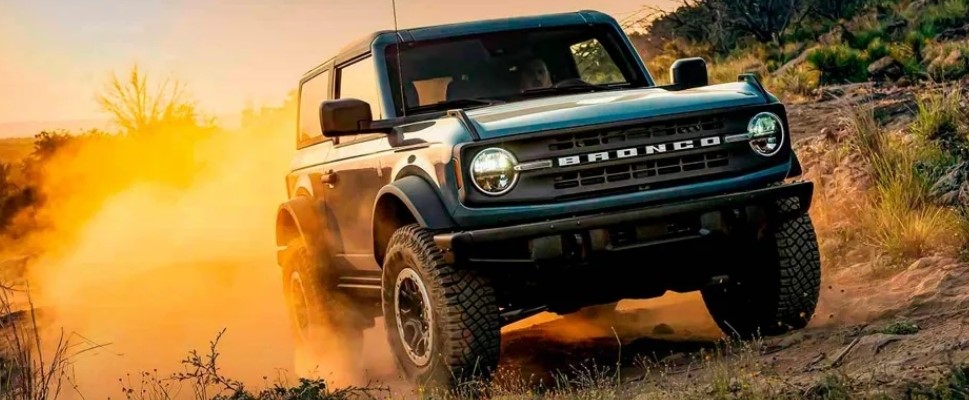
Few vehicles carry the same rugged legacy and cultural clout as the 2025 Ford Bronco. From its debut in 1966 as a simple, capable off-roader to its reintroduction in 2021 as a tech-loaded adventure SUV, the Bronco’s evolution is a compelling story of design, purpose, and innovation. In this post, we’ll explore how the older Ford Broncos compare to the latest models across several key areas: design, performance, technology, off-road capability, comfort, and cultural impact.
But first- let’s take a dive into the 2025 Ford Bronco and see what all it has to offer:
The 2025 Ford Bronco continues its legacy as a rugged, off-road-capable SUV, blending advanced technology with comfort and safety features. Drawing exclusively from Ford’s official materials, this comprehensive overview delves into the Bronco’s performance, entertainment, safety, and comfort aspects.
Performance: Built Wild® for Every Terrain
Engine Options and Transmission
The 2025 Ford Bronco offers three turbocharged engines:
- A 2.3L inline-four engine
- A twin-turbo 2.7L V6
- A twin-turbo 3.0L V6
These engines are paired with either a 7-speed manual transmission, featuring a crawl gear for off-road precision, or a 10-speed automatic transmission, providing optimal power and torque across various terrains.
G.O.A.T. Modes® and Off-Road Capabilities
The Bronco’s Terrain Management System includes G.O.A.T. Modes® (Goes Over Any Type of Terrain), allowing drivers to adapt to conditions such as Normal, Eco, Sport, Slippery, Sand, Mud/Ruts, Rock Crawl, and Baja.
For enhanced off-road performance, the Sasquatch® Package adds 35-inch beadlock-capable wheels, electronic-locking front and rear axles, and high-clearance fender flares.
Suspension Systems
The Bronco offers multiple High-Performance Off-Road Stability Suspension (HOSS) systems:
- HOSS 1.0: Standard on Base and Outer Banks® models, featuring heavy-duty dampers.
- HOSS 2.0: Includes Bilstein® Position-Sensitive Dampers, standard on Badlands® and Heritage Edition models.
- HOSS 3.0: Adds FOX™ internal bypass dampers and steel bash plates, standard on the Stroppe® Edition.
- HOSS 4.0: Exclusive to the Raptor® model, featuring semi-active dampers and increased wheel travel.
Towing and Payload
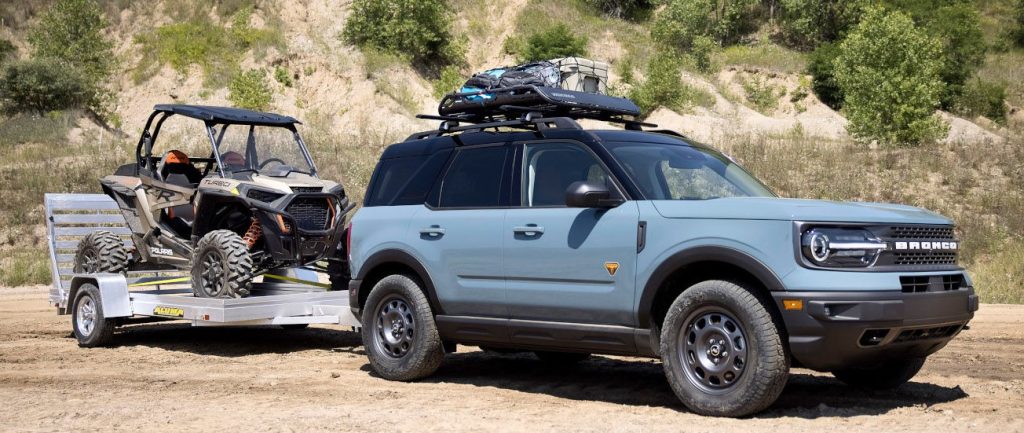
The Bronco boasts a towing capacity starting at 3,500 pounds, with the Raptor® model capable of towing up to 4,500 pounds.
Entertainment: Advanced Technology for Every Journey
SYNC® 4 Infotainment System
Standard across all trims, the SYNC® 4 system features a 12-inch touchscreen, offering seamless integration with Apple CarPlay® and Android Auto™. This system provides voice recognition, real-time traffic updates, and over-the-air software updates.
B&O® Sound System
The available B&O® Sound System by Bang & Olufsen® includes up to 12 speakers and a subwoofer, delivering premium audio quality for all passengers.
Connectivity and Charging
The 2025 Ford Bronco is equipped with multiple USB ports, 12V power outlets, and an available 110V power outlet, ensuring devices remain charged during adventures.
Safety: Confidence On and Off the Road
Ford Co-Pilot360® Technology
Standard on all models, Ford Co-Pilot360® includes:
- Pre-Collision Assist: Detects potential collisions and applies brakes if necessary.
- Blind Spot Information System (BLIS®): Alerts drivers to vehicles in blind spots.
- Lane-Keeping System: Helps maintain lane position.
- Auto High-Beam Headlamps: Automatically adjusts between high and low beams.
- Rear View Camera: Provides visibility when reversing
Additional Safety Features
The Bronco also offers:
- Adaptive Cruise Control: Maintains a set distance from vehicles ahead.
- Evasive Steering Assist: Helps avoid potential collisions.
- Reverse Brake Assist: Detects obstacles while reversing and applies brakes if needed.
Comfort: Designed for Adventure and Everyday Use
Interior Features
The Bronco’s interior combines durability with comfort:
- Marine-Grade Vinyl Seats: Resistant to mildew and easy to clean.
- Rubberized Flooring: Includes drain plugs for easy cleaning.
- Heated Seats and Steering Wheel: Available for added comfort in cold conditions.
- Rear Climate Control Vents: New for 2025, ensuring comfort for rear passengers.
Practical Storage Solutions
The Bronco offers:
- MOLLE Panel System: Integrated into seat backs for gear storage.
- Tactically Located Grab Handles: Assist with entry and exit on steep terrains.
Conclusion
The 2025 Ford Bronco stands as a testament to Ford’s commitment to blending rugged performance with modern technology and comfort. Whether navigating challenging terrains or cruising city streets, the Bronco offers a versatile and reliable driving experience. With its array of features and capabilities, it’s well-equipped to meet the demands of adventurers and daily commuters alike.
So now – let’s see how the old compares to the new:
1. Design: From Bare-Bones Utility to Bold, Retro-Modern Appeal
Classic Broncos (1966–1996)
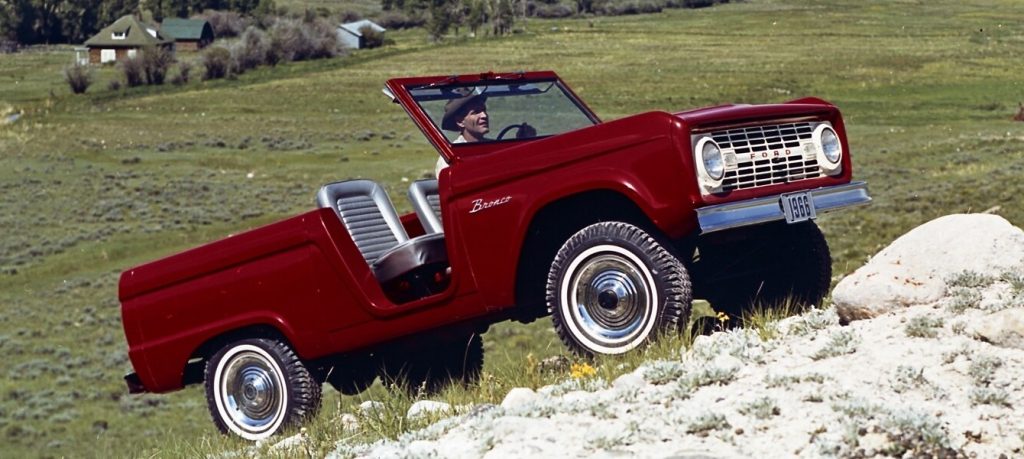
The original Bronco was born to compete with the Jeep CJ and International Scout. Early models featured a boxy, utilitarian design with flat panels and minimal ornamentation. They were small, maneuverable, and tough — with removable tops and sparse interiors that emphasized function over form.
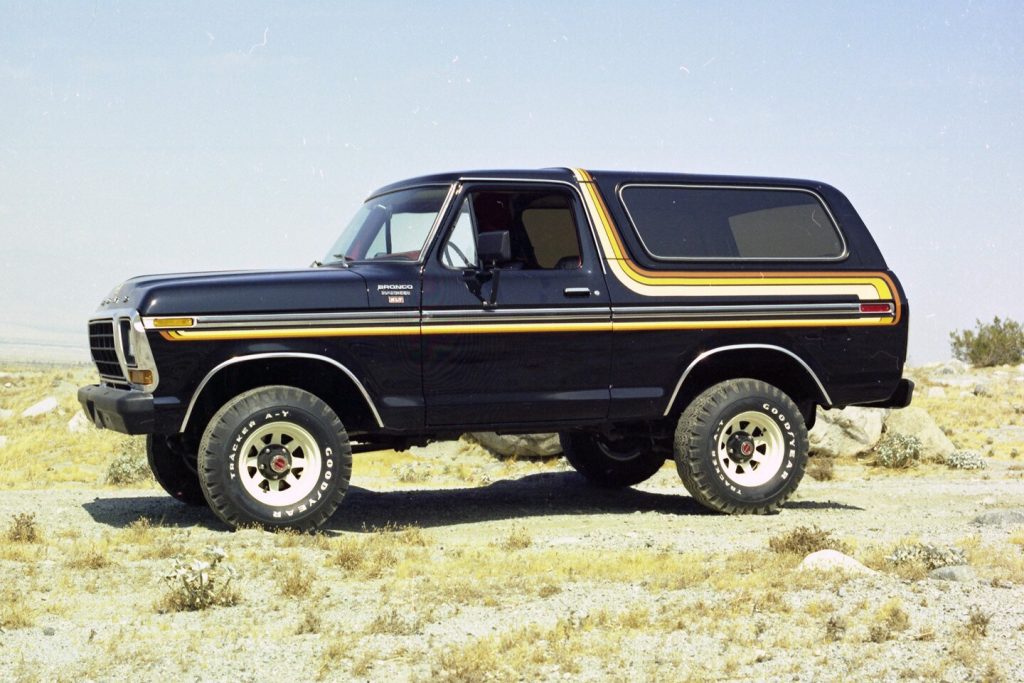
Over time, the Bronco grew in size, especially by the late 1970s and into the 1980s and ’90s, adopting a full-size platform based on the Ford F-Series. By the time production ended in 1996, the Bronco had become more of a two-door SUV with some refinement but retained its ruggedness.
Modern Broncos (2021–2025)

When Ford revived the Bronco in 2021, it did so with a heavy dose of nostalgia. The new models pay homage to the first-gen Broncos with flat fenders, round headlights, and a boxy silhouette — but with a modern twist. LED lighting, aggressive stance, and tech-driven design cues give it a futuristic look while staying true to its heritage. You also get two- and four-door options now, with removable roofs and doors — a nod to the old Bronco’s spirit.
2. Performance: Simplicity vs. Turbocharged Muscle
Classic Broncos
Early Broncos used simple inline-6 and small-block V8 engines. They were carbureted, low on horsepower by today’s standards (around 105–200 hp), but easy to work on and incredibly durable. Four-wheel drive was part of the DNA, with manual locking hubs and transfer cases that could be handled in the field.
However, they weren’t particularly fast or refined, especially on the highway. Fuel economy was low, and suspension systems were stiff by today’s standards.
Modern Broncos
The new Broncos offer high-output turbocharged engines, such as the 2.3L EcoBoost I-4 and 2.7L twin-turbo V6, with horsepower ranging from around 275 hp to over 400 hp in the Raptor model. Modern multi-link suspension, electronic differentials, 10-speed automatic transmissions, and terrain-selectable drive modes make the new Broncos far more capable and versatile on and off-road.
Where older models relied on mechanical simplicity, new Broncos offer performance precision and adaptability that makes them more capable in virtually every measurable way.
3. Off-Road Capability: Then and Now
Classic Broncos
From the beginning, off-road prowess was central to the Bronco’s identity. It came with high ground clearance, solid axles, short overhangs, and 4WD with low-range gearing. They were spartan but extremely capable.
Enthusiasts frequently modified older Broncos with lift kits, lockers, and oversized tires to take on trails — and the simplicity of the systems made it easy to do so.
Modern Broncos
Today’s Broncos take off-roading to a new level, straight from the factory. The GOAT Modes® (Goes Over Any Terrain), front and rear electronic locking differentials, sway-bar disconnects, 35-inch tires with the Sasquatch Package, and multiple High-Performance Off-Road Suspension Systems (HOSS) make the Bronco one of the most trail-ready production vehicles on the market.
Modern traction control systems, crawl ratios up to 94.75:1 (manual-equipped models), and real-time data from off-road gauges elevate the experience beyond what classic Broncos could deliver — unless heavily modified.
4. Technology and Interior: Spartan vs. Smart
Classic Broncos
Older Broncos were spartan. Early models didn’t even come with power steering or air conditioning. Dashboards were utilitarian, filled with analog dials, metal surfaces, and vinyl upholstery. If you wanted luxury or tech, you were looking at the wrong vehicle.
That simplicity was part of their charm. The interiors were easy to clean, easy to fix, and built for durability over comfort.
Modern Broncos
The 2021+ Bronco comes packed with tech:
- A 12-inch SYNC® 4 touchscreen
- Apple CarPlay® and Android Auto™
- B&O® audio system
- Ford Co-Pilot360™ advanced safety suite
- Trail Maps, 360-degree trail cameras, and over-the-air updates
You also get heated leather seats, dual-zone climate control, digital driver displays, and advanced navigation tools. While still washable and trail-ready, modern Broncos give you the comfort and convenience of a contemporary SUV.
5. Comfort and Usability: Weekend Warrior vs. Daily Driver
Classic Broncos
The older Broncos were never designed to be family-friendly daily drivers. They were noisy, stiff, and cramped by today’s standards. Long highway drives could be exhausting. But for a weekend trip to the mountains or the desert, they were perfect companions.
Modern Broncos
Today’s Bronco is a legitimate daily driver. Quiet cabins, refined road manners, and abundant passenger space — especially in the four-door version — make it usable for everything from commuting to overlanding.
You can fold the rear seats flat for gear, camp inside it, or tow a trailer (up to 4,500 lbs in Raptor trims). You get the best of both worlds: serious off-road capability without sacrificing on-road comfort.
6. Cultural Impact: Icon Then, Icon Now
Classic Broncos
The early Broncos earned their reputation in the wild — off-road competitions, hunting trips, and beach cruises. In the 1990s, the Bronco reached peak cultural notoriety with the infamous O.J. Simpson police chase, which ironically cemented its place in American pop culture.
Collectors and restorers now prize vintage Broncos for their simplicity and style, with well-preserved or modified first-gen models commanding six-figure prices.
Modern Broncos
The 2021 re-release was one of the most anticipated returns in automotive history. Ford successfully reignited the brand, creating a full ecosystem of trims, accessories, and merchandise. With off-road series, media coverage, and a devoted fanbase, the Bronco is again a cultural juggernaut.
Special editions like the Bronco Raptor and Heritage Editions pay direct tribute to the past while pushing the brand forward.
Final Verdict: Evolution, Not Replacement
The classic Ford Broncos and the new generation are products of their times — and both excel in different ways.
- Classic Broncos are simpler, more mechanical, and raw — perfect for purists, collectors, and off-road tinkerers.
- Modern Broncos are sophisticated, safer, more comfortable, and more versatile — designed for both trail warriors and city dwellers.
If you want a time machine to the early days of American 4×4 culture, a restored classic Bronco will scratch that itch. But if you’re looking for the most capable, feature-packed Bronco ever made, the new models are unmatched.
Whether you’re drawn to the retro appeal of the original or the high-tech prowess of the new, one thing’s clear: the spirit of adventure still lives in every Ford Bronco.
Click here to browse our Bronco inventory >>>
Connect with us


